Alternative Communication Services & AI-Media

ACS is now part of the Ai-Media family
In May 2020, AI-Media acquired ACS, adding its range of captioning services to our product suite. With AI-Media, you can access all the captioning expertise and services that ACS was renowned for, plus much more. Trusted by the world’s leading brands, AI-Media offers all the technology you need in one place to caption anything.
Get accuracy rivalling human captions, at a fraction of the cost, with our LEXI automatic captions. And send LEXI captions to any screen in the world with our range of encoders that are powered by the iCap Cloud Network – the world’s largest caption delivery network.
ASC has always done a great job linking people with a variety of resources. If you’d like to access similar resources, click the link below. Access AI-Media’s full range of end-to-end captioning solutions using the Solutions and Products menu options.


Latest Insights from Ai-Media

Breaking Barriers: AI-Media and StreamShark Collaborate to Revolutionize Digital Accessibility
Breaking Barriers: AI-Media and StreamShark Collaborate to Revolutionize Digital Accessibility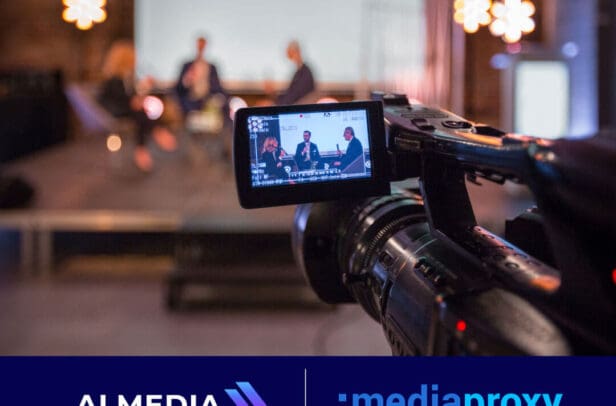
AI-Media and Mediaproxy Announce Partnership
AI-Media and Mediaproxy Announce Partnership to Bring Together Leading Broadcast Compliance and AI-Powered Captioning
AI-Media Revolutionizes Captioning for DAZN with AI-Powered LEXI Tool Kit
AI-Media partners with DAZN for captioning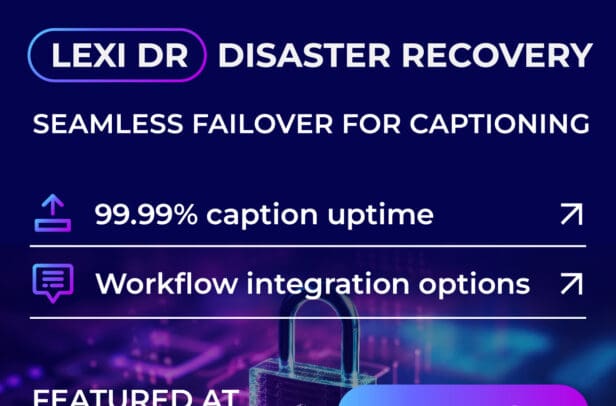
AI-MEDIA UNVEILS ENHANCED LEXI TOOLKIT AT NAB 2024
World Leader in AI-Powered Captioning Solutions Introduces the new LEXI DR (Disaster Recovery) and LEXI Recorded